Legacy: The Handwritten Typeface That Makes Design Feel Human Again
In a digital world brimming with rigid, geometric fonts, there's an undeniable craving for the warmth and personality of the human touch. Whether you're a designer crafting a brand identity, a marketer creating an engaging campaign, or a small business owner building a website, you often face the challenge of making your digital communications feel authentic, approachable, and uniquely yours. This is where the art of handwritten typography comes in, and specifically, where Legacy excels.
The Gap Between Digital Precision and Human Connection
Modern design tools give us incredible precision, but sometimes that perfection can feel sterile. Consider a boutique coffee shop's website using a stark, minimalist font—it conveys cleanliness, but perhaps misses the cozy, artisan vibe of the shop itself. Or think about a heartfelt invitation for a personal event; a standard system font might lack the sentimental weight you wish to convey. The goal is to bridge that gap: to achieve professional polish without sacrificing individuality, to stand out in a crowded market without appearing unprofessional, and to inject a sense of personal craft into mass digital distribution.
This is the core need that handwritten typefaces address. They serve as a digital shortcut to authenticity. However, not all handwritten fonts are created equal. Some are overly casual or messy, risking a look of carelessness. Others are so stylized they become difficult to read or use across various applications. The ideal solution is a typeface that balances playful character with clear readability, and versatile structure with effortless charm. Legacy is designed to be exactly that solution.
How Legacy Addresses the Need for Authentic Design
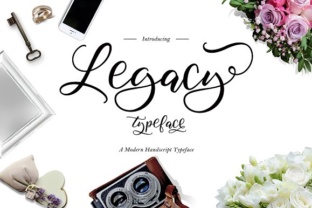
Legacy isn't just another script font. It's a playful handwritten typeface built with a specific purpose: to enable the creation of awesome handwritten designs with ease. Its simplicity is its greatest strength. The letterforms are consistent and clean enough for professional use, yet they retain the subtle irregularities and flowing connections that mimic natural handwriting. This means you don't need to be a calligraphy expert to achieve that look. With Legacy, you can quickly generate headlines, logos, quotes, and body text that feel as if they were crafted by hand, saving you hours of manual illustration or the hunt for a perfect, yet elusive, custom script.
This capability directly translates to solving real-world design challenges. For the brand seeking a friendly identity, Legacy can become the cornerstone of a logo and marketing materials that whisper "personable" rather than shout "corporate." For the content creator needing engaging social media graphics, a quote overlaid with Legacy immediately feels more inspirational and shareable. For the developer or entrepreneur building a website, using Legacy for key headings can transform a standard template into a site with memorable character.
Practical Applications and Tangible Outcomes
Let's explore where applying Legacy can lead to improved outcomes.
- Brand Differentiation: In sectors like craft goods, independent publishing, personal coaching, or lifestyle brands, personality is currency. Using Legacy for your brand name and taglines can create an instant visual hook that distinguishes you from competitors using more anonymous typefaces. The outcome is a stronger, more sticky brand recall.
- Enhanced Emotional Engagement: Marketing campaigns for products or services that rely on emotional connection—think wellness, family, creativity, or handmade items—benefit immensely from typography that feels human. A call-to-action button with text in Legacy, or a key promotional headline, can increase perceived trustworthiness and click-through rates.
- Elevated Personal Projects: From wedding websites and custom invitations to personal blogs and portfolio sites, Legacy allows individuals to imbue their projects with a sense of curated care. The outcome is a project that feels intentionally crafted and special, rather than generically assembled.
- Streamlined Design Process: For designers and non-designers alike, the ease of use of Legacy is a practical benefit. It works harmoniously with other fonts (pair it with a simple sans-serif for body text for perfect balance) and behaves well in layout software. The outcome is reduced design time and frustration, allowing you to focus on the larger creative concept.
Tailoring Legacy to Different User Needs
The way you leverage Legacy will depend on your specific role and goals.
For the Professional Designer: You'll likely see Legacy as a versatile tool in your typographic toolkit. Use it for accent and display purposes. Consider it for client projects where the brief calls for "authentic," "handcrafted," or "approachable." Your approach might involve creating custom lettering combinations or using Legacy as a base for further illustrative embellishment. The key consideration is knowing when its playful tone is appropriate for the brand's voice.
For the Marketing Professional or Content Creator: Your use will be more output-focused. Legacy becomes a go-to for creating high-impact visual content quickly. Think about using it for video title cards, key statistics or quotes in infographics, and the hero text on landing pages for specific campaigns. Your approach is about grabbing attention and fostering connection. A useful recommendation is to test designs with Legacy against more standard fonts in your audience to gauge emotional response.
For the Small Business Owner or Entrepreneur: Your primary need is effective, DIY-friendly branding. Legacy offers a straightforward way to elevate your materials without a large design budget. Use it consistently on your website's main headings, your product packaging labels, and your social media banner images. Your approach should be one of consistency; apply it to the most visible text elements to build a cohesive and characterful brand identity. Remember that readability is paramount—use it at sufficient sizes and with good color contrast.
Recommendations and Useful Considerations
To implement Legacy successfully, keep a few guiding principles in mind.
- Pair with Purpose: Legacy is a display face. For long paragraphs of text, pair it with a neutral, highly readable sans-serif or serif font. This contrast will make your Legacy headings pop and ensure your content remains easy to consume.
- Mind the Context: The playful, handwritten nature of Legacy makes it perfect for creative, personal, or lifestyle contexts. It may be less suitable for highly technical, financial, or formal legal communications where absolute neutrality and gravity are required.
- Embrace White Space: Handwritten styles often benefit from a little breathing room. Don't crowd text set in Legacy. Allow generous margins and padding around it to let its character shine.
- Explore Variations: Many handwritten typefaces, including Legacy, might offer stylistic alternates or varying weights. Experiment with these to find the exact tone—from casual to elegant—that fits your project.
The Outcome: Design with a Human Signature
Ultimately, integrating a typeface like Legacy into your workflow is about reclaiming a sense of humanity in digital spaces. It’s a practical choice that leads to aesthetic and emotional outcomes. It allows you to communicate not just information, but intention and feeling. By solving the challenge of impersonal typography, Legacy helps you create designs that resonate on a human level—designs that are awesome not just because they are visually appealing, but because they feel thoughtfully made. In a landscape of automated and template-driven design, that handwritten signature, effortlessly achieved with Legacy, can be your most powerful differentiator.