The Claudia Typeface: Formal Elegance in a Digital Hand
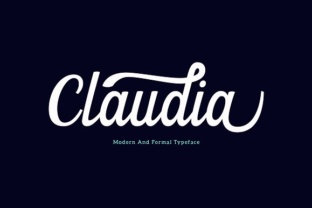
In a world where digital communication is dominated by a handful of sterile, corporate fonts, the human touch often feels missing. Enter Claudia, a formal, modern handwritten typeface that bridges the gap between personal expression and professional polish. It is not the casual, whimsical script you might find on a birthday card; Claudia is deliberate, elegant, and structured, offering a unique solution for creators and businesses seeking to stand out with authenticity.
Why Handwritten Typography Is Resonating Now
The resurgence of interest in handwritten typefaces, particularly formal ones like Claudia, is a direct response to our digital environment. As interfaces become more homogenized and user experiences increasingly automated, there is a growing craving for signals of humanity and craftsmanship. This trend aligns with broader movements in design and marketing towards authenticity, bespoke branding, and emotional connection. Claudia fits perfectly into this shift, offering a curated human touch—one that is consistent and reliable, unlike actual handwriting, but carries the same warmth and individuality.
For professionals, marketers, and entrepreneurs, this isn't just about aesthetics; it's about strategy. In crowded digital markets, brand differentiation is critical. A formal handwritten font like Claudia can instantly convey values such as attention to detail, personal service, and artistic sensibility, without sacrificing the clarity and authority required for formal communications.
The Evolution of Formal Script in Digital Design
Digital handwritten fonts have evolved dramatically. Early versions often struggled with legibility, inconsistent letter joins, and a lack of stylistic range. They were largely decorative. Today, typefaces like Claudia represent a mature category: functional handwriting. They are designed with extensive character sets, multiple glyphs for natural variation, and careful attention to spacing and alignment, making them viable for longer texts and serious applications.
Claudia’s "formal modern" designation is key. It implies a design that respects traditional calligraphic proportions and weight contrast, while stripping away any overt historical ornamentation. The result is a script that feels contemporary, clean, and versatile—usable on a tech startup’s website, a high-end cosmetic brand’s packaging, or an educator’s course materials without seeming anachronistic or overly ornate.
Practical Implications for Creators and Businesses
Integrating a typeface like Claudia into your workflow requires thoughtful application. Its strength lies in selective use for maximum impact.
- Brand Identity & Logos: Claudia can serve as a stunning primary or secondary logotype for businesses in creative industries, luxury goods, personalized services, or education. It establishes a tone instantly.
- Key Headlines & Callouts: Using Claudia for main headings or pull quotes in articles, websites, or presentations draws the eye and adds a layer of sophisticated personality to the content.
- Signature Elements: Think of it as a digital signature. It can be effectively used for email signature disclaimers, certificate names, or the closing line on a website, adding a touch of personal closure.
- Limited Body Text: While perhaps not for dense paragraphs, Claudia can be beautiful for short introductory blocks, invitation text, or product descriptions where mood is paramount.
The recommendation is always to pair Claudia with a highly legible, neutral sans-serif or serif font for body text. This combination creates balance—the personality of Claudia anchored by the readability of a more conventional typeface.
Adapting to Modern Workflows and User Expectations
Today’s users expect digital experiences to be both efficient and engaging. They scroll quickly but are captivated by distinctive details. Claudia meets this expectation by offering an engaging visual detail that doesn’t hinder usability. For the creator—the blogger, freelancer, or marketer using design tools—Claudia is a ready-made asset. It provides the effect of custom lettering without the time investment or skill requirement of actual hand-drawn typography, fitting seamlessly into fast-paced digital workflows.
Furthermore, in an era of remote work and digital-first relationships, tools that help convey a more personal, trustworthy tone are invaluable. An email campaign using Claudia for its headline might feel more like a personal note than a bulk message. A legal or financial consultancy using it sparingly on their website could soften their formal image with approachability.
Observations on Technology and Accessibility
The development of typefaces like Claudia also highlights advances in font technology. To function as a credible handwritten font, it must include OpenType features like contextual alternates, which prevent repetitive letter patterns and mimic the natural inconsistency of real writing. This technological backbone is what allows Claudia to be both "handwritten" and professionally reliable. For the end-user, this means the font works intelligently in their software, enhancing the design without demanding extra manual tweaking.
A Forward-Looking, Yet Grounded, Perspective
The future of design will continue to balance automation with individuality. While AI-generated graphics and layouts become more common, the counter-trend towards human-centric design elements will strengthen. Formal handwritten typography, exemplified by Claudia, will remain a powerful tool in this arena. Its application is likely to expand into new mediums like dynamic UI elements for premium apps, augmented reality interfaces, and personalized digital products.
However, the insight remains grounded: Claudia is not a universal solution. Its use is strategic. The key for professionals and creators is to understand the specific message and emotion it conveys—refined, personal, and artfully considered—and deploy it where that message aligns with their content or brand goals. Overuse can dilute its impact and harm readability.
Ultimately, Claudia represents more than just a font. It is a design choice that acknowledges a fundamental human desire for connection and beauty in our digital interactions. By offering a formal, modern handwritten voice, it provides a way to speak in a digital space with a tone that feels remarkably, and refreshingly, human.