The Elegant Artistry of Leisa: A Handwritten Script with Swash
In the world of typography and digital design, the quest for authenticity and human touch is ever-present. Amidst a landscape of clean, geometric fonts, handwritten scripts offer a distinct voice—one that conveys personality, warmth, and artistic flair. Among these, Leisa stands out as an elegant handwritten script characterized by its flowing forms and beautiful swashes that impart a distinctly feminine and handmade aesthetic to any project.
Understanding the Core Characteristics of Leisa Script
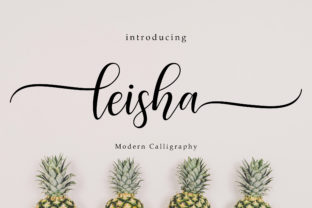
At its heart, Leisa is more than just a collection of letters; it is a carefully crafted simulation of natural handwriting. The script features a baseline rhythm that feels organic, with letters that appear to have been drawn with a confident, yet graceful, pen stroke. This organic quality is fundamental to its appeal.
The defining feature of Leisa, however, is its extensive use of swashes. Swashes are the decorative extensions or flourishes attached to letterforms, often found on capitals or terminal strokes. In Leisa, these swashes are not overly exaggerated or gothic; they are balanced, elegant extensions that flow naturally from the core letter. They might curl, loop, or taper delicately, adding a layer of visual complexity without overwhelming the readability of the text.
Letterforms in Leisa typically exhibit a moderate contrast between thick and thin strokes, reminiscent of pen-drawn scripts. The connections between characters in cursive settings are smooth and intentional, creating a cohesive word shape rather than a series of disjointed letters. This combination of traits—the organic flow, the decorative swashes, and the connected cursive nature—collectively creates that "handmade touch" the font promises.
The Practical Advantages of Using a Script Like Leisa
Choosing a font like Leisa for a design project brings several tangible advantages beyond mere aesthetics. Firstly, it establishes an immediate emotional connection. The human-like quality of the script can make communications feel more personal, intimate, and trustworthy. For brands aiming to convey craftsmanship, care, or a boutique sensibility, this is a powerful tool.
Secondly, it provides standout differentiation. In digital spaces saturated with sans-serif fonts, a well-applied handwritten script like Leisa can capture attention and create a memorable visual anchor. It breaks the mold of corporate uniformity.
From a functional design perspective, the included swashes and alternates offer creative flexibility. Designers can use standard characters for body text and employ the swash variants for logos, initials, headings, or decorative accents within the same text block. This internal consistency avoids the need to mix disparate fonts, maintaining a unified yet dynamic typographic palette.
Real-World Applications and Use Cases
The application of Leisa Script spans across numerous fields and mediums, precisely because of its blend of elegance and approachability.
- Branding and Identity: Leisa is frequently employed for logos, particularly in industries like fashion, beauty, wellness, artisanal foods, and wedding services. Its feminine touch makes it a popular choice for brands targeting a female audience or promoting products associated with grace and care.
- Digital and Print Publications: Blog headers, magazine titles, and book covers can utilize Leisa to suggest a personal, authorial voice. It works well for publications focused on lifestyle, art, personal essays, or creative tutorials.
- Invitations and Stationery: This is a classic domain for handwritten scripts. Leisa’s elegance makes it ideal for wedding invitations, event announcements, greeting cards, and personalized stationery, where the goal is to evoke a sense of occasion and thoughtful preparation.
- Web and Interface Design: While not suitable for long paragraphs of body text on websites due to readability concerns, Leisa excels as a decorative element. It can be used for key headings, feature quotes, call-out text, or in hero sections to set a specific mood before the user delves into more readable content.
- Product Packaging and Labeling: For small-batch, handmade, or luxury products, packaging text rendered in Leisa can reinforce the product's quality and artisanal story directly on the container or label.
- Social Media and Marketing Graphics: In the fast-scrolling environment of social platforms, graphics that use a distinctive font like Leisa can halt the scroll. It’s effective for campaign slogans, promotional quotes, or as a watermark for content creators wanting a signature style.
Educators and researchers might also find use for Leisa in creating visually engaging presentation materials or handouts for topics related to art, design, or humanities, where the form of communication itself can reflect the subject matter.
Important Considerations for Implementation
To harness the beauty of Leisa Script effectively, one must also be mindful of its limitations and best practices. Readability is the primary consideration. The intricate swashes and connected cursive forms can become challenging to parse at small sizes or in dense blocks of text. Therefore, its use is generally recommended for display purposes—headings, logos, short phrases—rather than for extended reading.
Contextual appropriateness is another key factor. While the font carries a feminine and handmade touch, this should align with the project's overall message. Using it in a context that demands stark neutrality or technical austerity could seem incongruous.
Technical implementation requires attention to detail. When using Leisa, especially its swash characters, designers should ensure proper spacing and kerning. The swashes can interact with neighboring letters, so manual adjustments might be needed to avoid awkward overlaps or gaps. Additionally, pairing Leisa with a complementary font for body text is crucial. A simple, neutral sans-serif or serif font often provides the necessary grounding, allowing Leisa to shine as an accent without compromising the legibility of the core content.
The Role of Handwritten Scripts in Modern Design Trends
The popularity of fonts like Leisa reflects broader trends in design. In reaction to the ultra-minimalist and often impersonal digital interfaces of the past decade, there is a growing movement towards design that feels human, imperfect, and emotionally resonant. This trend encompasses not only typography but also imagery, illustration, and layout.
Leisa Script fits perfectly into this trend. It offers a digital solution to achieve a handmade look without the inconsistency of actual handwriting. For businesses and creators, it provides a scalable, reproducible brand element that still feels custom and crafted. In an era where audiences value authenticity and story, the visual cue of "handwriting" can be a potent shorthand for those qualities.
Furthermore, the versatility of such scripts has expanded with font technology. Many versions of Leisa and similar fonts come with extensive OpenType features, including multiple swash alternatives, ligatures, and contextual alternates. This allows for sophisticated, dynamic typography that can adapt to different letters and positions, making the handwritten effect more natural and less repetitive.
Observing its use across various media, one notes that the most successful applications often use restraint. A single, powerful word in Leisa with a graceful swash can be more effective than an entire sentence rendered in the script. This balance between distinctive artistry and clear communication is the hallmark of expert typographic use.
Final Observations on Artistic Typography
Leisa Script represents a category of typography that bridges the gap between formal design and personal expression. It serves as a reminder that typefaces are not merely utilitarian tools for conveying words; they are also artistic instruments that carry tone, emotion, and identity.
For the hobbyist experimenting with a new blog, the business owner crafting a brand, the educator designing a compelling resource, or the professional designer seeking the perfect accent font, understanding the attributes and appropriate use of an elegant handwritten script is a valuable skill. Leisa, with its specific blend of elegance, swash details, and handmade charm, provides a ready-made path to inject that human touch into digital and physical creations, making them stand out with warmth and intention.
The key lies in appreciating it as a specialized tool—one best used for emphasis, decoration, and establishing mood. When applied with consideration for readability, context, and technical pairing, Leisa can elevate a design from simply informative to genuinely evocative, fulfilling the enduring desire for connection and beauty in our visual communications.