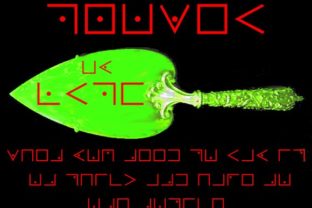
The Trowel Cipher: A Gateway to Creative Encryption
Hidden within the folds of history, among dusty guild records and whispered rituals, lies a cryptographic system of wonderful simplicity. Known as the Freemason's cipher, or more evocatively, the Pigpen cipher, this method turns a simple trowel into a key for secret communication. Its beauty is not in complex algorithms but in an elegant, geometric substitution that anyone can learn and use. For creators, designers, and storytellers today, the Trowel cipher offers more than historical intrigue; it provides a tangible starting point for a world of creative coding, personal branding, and layered communication.
Beyond Security: The Creative Core of the Trowel System
At its heart, the Trowel cipher is a simple substitution cipher. Letters are placed within a grid of nine squares and crosses—a trowel shape—and are represented by the fragment of the grid they occupy. An 'A' might be the top-left corner of a square, a 'B' the segment of a cross to its right. The system’s alleged use by Freemasons speaks to its utility for group identity. While it doesn’t offer robust security against determined analysis, its genius is in its immediate visual obscurity. A casual observer sees a collection of angles and dots; an initiated member reads a clear message. This duality—clear to some, opaque to others—is a powerful creative concept.
The cipher even incorporates a subtle typographic distinction: majuscules (capital letters) and minuscules (lowercase letters) are differentiated by the placement of dots within their symbolic fragments. This attention to detail transforms it from a mere code into a rudimentary font system. It invites the modern user to think about form, glyph design, and how slight variations can carry meaning.
Modern Applications and Creative Interpretations
How can such a historical tool resonate with today’s entrepreneurs, educators, and hobbyists? The applications are surprisingly varied, moving far beyond literal secret messages.
Brand Identity and Visual Storytelling
Designers and small business owners can adapt the Trowel grid as a framework for creating custom iconography or a brand cipher. Imagine a coffee shop using a modified trowel grid to encode their founding year or motto into a subtle pattern on their packaging—a hidden layer of story for curious customers. A freelancer could incorporate a single encoded letter, their initial, into their logo as a signature mark of identity. The structure provides a constrained creative canvas, which often leads to more coherent and original designs.
Engagement and Interactive Content
Bloggers, marketers, and educators can use the cipher to create interactive puzzles or engagement tools. A history blog might present a Freemason document encoded in Trowel, challenging readers to decipher it. An educator could frame a lesson on historical communication methods by having students create and break simple Trowel-coded messages, grounding abstract concepts in hands-on practice. This transforms passive consumption into active participation.
Artistic Exploration and Personal Projects
For artists and hobbyists, the geometric nature of the Trowel cipher is a direct inspiration. It can evolve into a pattern for embroidery, a basis for abstract art, or a structural element in jewelry design. The “Swine and Roses” variation, which incorporates Rosicrucian elements, highlights how the basic system can be hybridized and enriched. Creators can merge the trowel grid with other symbolic systems—astrological signs, alchemical symbols, personal iconography—to create entirely new coded visual languages for diary keeping, graphic novels, or themed art projects.
Adapting the Cipher for Different Audiences and Formats
The key to using the Trowel cipher effectively is adaptation. Its raw historical form may not suit every context.
For a professional audience, such as designers or publishers, emphasize its structural elegance and potential as a design framework. Present it as a minimalist grid system for generating unique glyphs. Keep the execution clean, digital, and precise.
For a general audience or educators, focus on its story and interactive potential. Explain the cipher simply, perhaps with a clear diagram. The goal here is engagement and understanding, so clarity is paramount. Avoid overly obscure references.
For personal or artistic projects
While creativity is encouraged, a few practical principles ensure your use of the Trowel cipher remains effective, not frustrating. The Trowel cipher, in its historical simplicity, reminds us that creativity often flourishes within constraints. It is a tool that bridges the pragmatic need for coded communication and the human desire for symbol and story. Whether you're a marketer looking to add depth to a campaign, a designer seeking a unique structural element, or a hobbyist exploring historical codes, this system offers a grounded starting point. From its basic grid, you can build outward into realms of visual design, interactive content, and personal art, always carrying with it that wonderful simplicity—the idea that a shape, a fragment, can hold a word, and a word can hold a world.Practical Guidance for Clear and Effective Use
🔗 You Might Also Like